
Home / Crops / Marigold
USA · Crop Guide

Marigold

Warm-season flower often used near vegetables to support pollinators and beneficial insects.

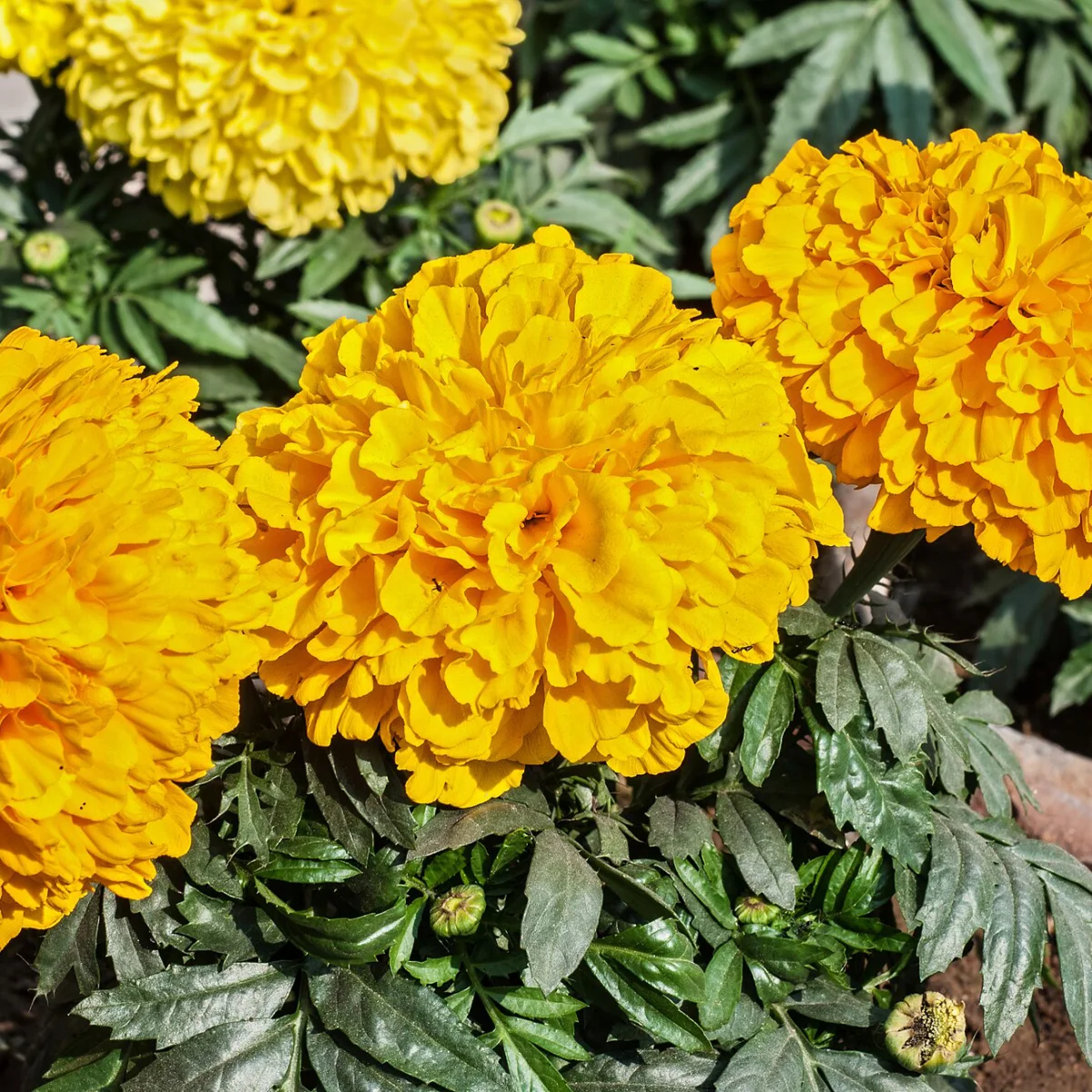
Representative image of Marigold
Tagetes erecta. · Joydeep · CC BY-SA 3.0
USDA Zone Suitability

Marigold

No suitability record has been added for Marigold .

When to Plant

Local planting windows for USA are not yet available.

Edaphia does not yet have local planting-window guidance for USA.

Growing Details

Local planting details are not yet available for this location.

Fertilizer

No fertilizer recommendation has been added for Marigold yet.

Expected Pests, Diseases & Disorders

Select “View info” for identifying symptoms, favorable conditions, prevention, and management. Reference photos are shown when available.

Disease 6
Powdery mildew Erysiphales (multiple genera and species) Common
Seedling damping-off Pythium spp.; Rhizoctonia solani; Fusarium spp.; others Common
Gray mold / Botrytis rot Botrytis cinerea Common
Southern blight Athelia rolfsii (syn. Sclerotium rolfsii) Common
Vegetable mosaic virus complex Cucumber mosaic virus; Watermelon mosaic virus; Zucchini yellow mosaic virus; others Common
Aster yellows Candidatus Phytoplasma asteris and related phytoplasmas Common
Pest 10
Aphids Aphididae Common
Whiteflies Aleyrodidae Common
Thrips Thripidae (several species) Common
Two-spotted spider mite Tetranychus urticae Common
Cutworms Noctuidae (several species) Common
Japanese beetle Popillia japonica Common
Slugs and snails Gastropoda (several species) Common
Fungus gnats Bradysia spp. Common
Cottontail rabbits Sylvilagus spp. Common
Birds (seed and fruit feeders) Aves (multiple species) Common

Companion Planting

Plant Partners for Marigold

Companion suggestions are grouped by how they may help, support, or conflict with this crop in the garden.

Support Plants

These plants can help attract pollinators, beneficial insects, or provide garden support nearby.

Basil

Beneficial insects

Both can add warm-season flowers or aroma near vegetable beds. Focus: garden diversity

Practical guidance Source: UVM Biodiverse Vegetable Garden

Beans, Lima Bush

Beneficial insects

Flowers near lima beans can support pollinators and beneficial insects. Focus: beneficial insects

Practical guidance Source: UVM Biodiverse Vegetable Garden

Beans, Lima Pole

Beneficial insects

Flowers near pole lima beans can support pollinators and beneficial insects. Focus: beneficial insects

Practical guidance Source: UVM Biodiverse Vegetable Garden

Beans, Snap Bush

Beneficial insects

Flowers near beans can support pollinators and beneficial insects. Focus: beneficial insects

Practical guidance Source: UVM Biodiverse Vegetable Garden

Pumpkins

Beneficial insects

Flowers near pumpkins can support pollinators during bloom. Focus: pollinators

Practical guidance Source: UVM Biodiverse Vegetable Garden

Yarrow

Beneficial insects

Flower diversity can support beneficial insects across the garden. Focus: beneficial insects

Practical guidance Source: UVM Biodiverse Vegetable Garden

Zinnia

Beneficial insects

Warm-season flowers together can support pollinators near vegetable beds. Focus: pollinators / beneficial insects

Practical guidance Source: UVM Biodiverse Vegetable Garden

Eggplants

Beneficial insects

Flowers near eggplants can support beneficial insects and add diversity to nightshade beds. Focus: beneficial insects

Practical guidance Source: UVM Biodiverse Vegetable Garden

Peppers, Bell

Beneficial insects

Flowers near peppers can support pollinators and beneficial insects. Focus: pollinators / beneficial insects

Practical guidance Source: UVM Biodiverse Vegetable Garden

Peppers, Hot

Beneficial insects

Flowers near hot peppers can support pollinators and beneficial insects. Focus: pollinators / beneficial insects

Practical guidance Source: UVM Biodiverse Vegetable Garden

Squash, Summer

Beneficial insects

Flowers near squash can help support pollinators and beneficial insects. Focus: pollinators / beneficial insects

Practical guidance Source: UVM Biodiverse Vegetable Garden

Tomatoes

Beneficial insects

Flowers near tomatoes can support pollinators and beneficial insects through the warm season. Focus: pollinators / beneficial insects

Practical guidance Source: UVM Biodiverse Vegetable Garden

Rotation Notes

No crop rotation notes have been added for Marigold yet.

Crop Reference

Scientific Name
Tagetes spp.
Crop Type
Flower
Default Method
Either
Growing Notes
Direct seed after soil warms or transplant young plants. Grow in full sun with good airflow. Deadhead spent blooms to encourage continued flowering.
Harvest Notes
Harvest flowers for small bouquets or leave blooms in the garden for pollinators and visual interest.
Storage Notes
Use fresh flowers soon after cutting. Dried petals may be saved for craft or ornamental uses depending on type.
My Garden Feature

Keep a Journal for Marigold

Save planting notes, upload photos, track weather and pest issues, record harvests, and build a history of what works in your garden.

Create a free account to add Marigold to My Garden and start keeping notes for your own planting.

Back to top