
Home / Crops / Garlic
USA · Crop Guide

Garlic

Cool-season allium grown from cloves for flavorful bulbs.

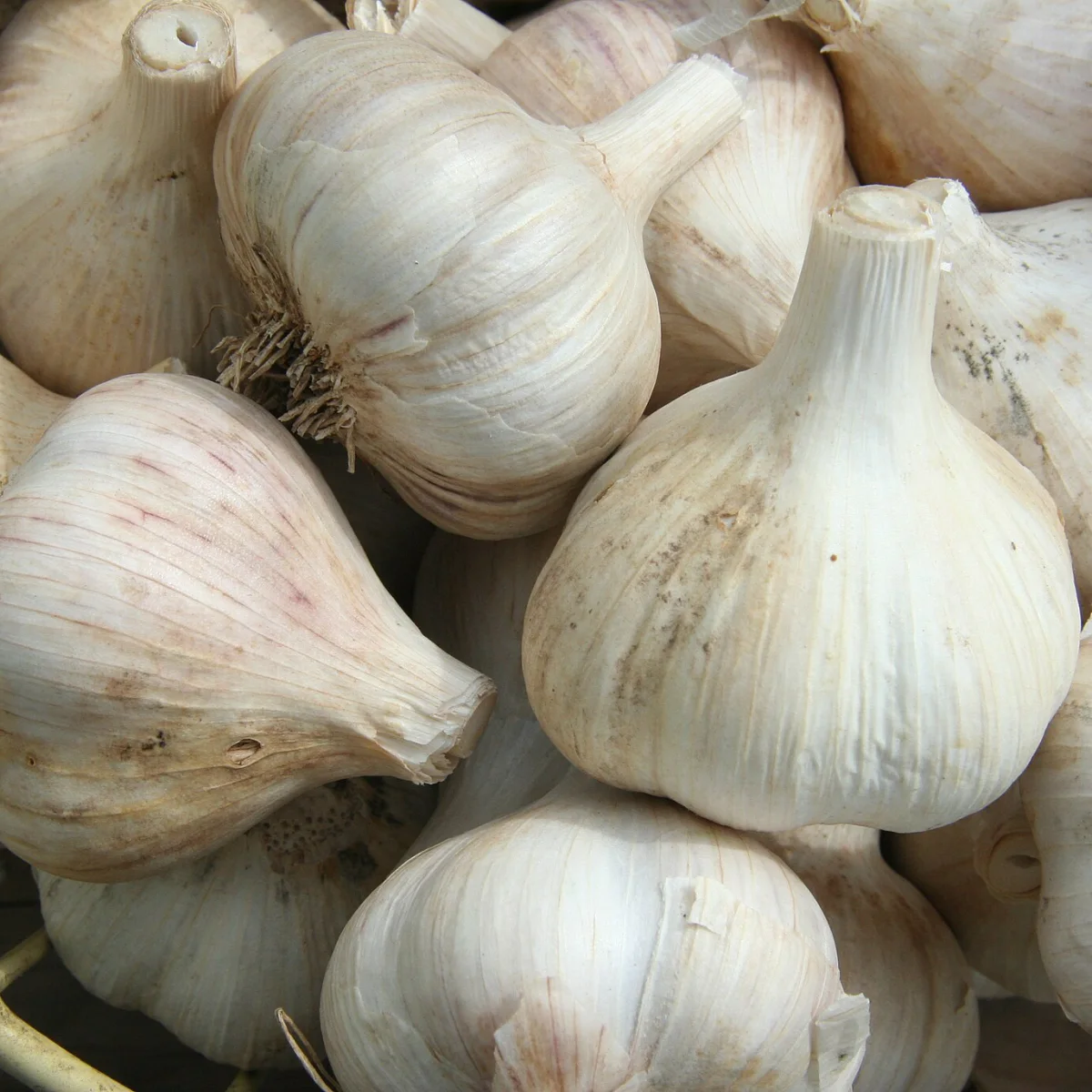
Representative image of Garlic
A basket of garlic (allium sativum) offered for sale at the farmers' market in Rochester, Minnesota · Jonathunder · CC BY-SA 3.0
USDA Zone Suitability
Regional Suitability

A reviewed rating of expected performance in a stated scope. Unknown is not the same as Not Suitable.

Learn more

Garlic

No suitability record has been added for Garlic .

When to Plant

Planting Window

A useful range for a planting action, not an order to plant on one exact day.

Learn more

Showing planting windows for Garlic for USA.

No planting-window records were found for this crop for USA.

Growing Details

Recommended Method
Growing Method

The material and action used to begin the crop: seed, transplant, set, bulb, crown, root, or slip.

Learn more
Bulbs
Sun Requirement
Full sun to partial shade; leafy and root crops are generally more shade-tolerant than fruiting vegetables.
Water Notes
Maintain even soil moisture for steady leaf or root development. Avoid drought stress, standing water, and frequent shallow watering.
Soil Notes
Use fertile, loose, well-drained soil with organic matter; root crops especially benefit from an unobstructed seedbed. Base corrections on a soil test.
General Notes
National home-garden baseline. Use the planting actions and active zone guidance for local timing; variety maturity and local conditions can change the harvest range.

Fertilizer

How to choose: Start with one option that matches your immediate goal. Use quick-release options for rapid correction, slow-release or organic options for steadier feeding, and follow label rates plus local soil-test guidance.
These are alternatives, not a combined recipe. Pick one approach that matches your goal and timing, then follow product-label rates and local soil-test guidance. Do not mix multiple fertilizers unless the product labels explicitly allow it.
Soil-Analysis Vegetable Fertility Plan
Not rated yet

For: Garlic

Start here first: This is the first-listed option for this crop.

Type: Other

Dose: Follow product label

Good fit: Fast correction

Base vegetable fertilization on a laboratory soil test and the needs of the crop family; legumes generally need less supplemental nitrogen than leafy or fruiting vegetables.

Application: Compatibility: not established; verify both product labels and apply separately unless the labels explicitly permit combining them. Always follow product-label rates for crop stage and local conditions. Rate: Follow product label. Caution: Do not combine products unless both labels permit the combination. Correct pH and confirmed deficiencies before planting. Apply only the nutrient and amount indicated by the soil test or local Extension recommendation; keep granular fertilizer away from stems and foliage and water it in according to the label.

Source: University of Maryland Extension

Complete Balanced Inherited: Roots & Bulbs
Not rated yet

For: Garlic

Type: Slow Release

Stage: Pre-plant

Goal: Root development

Dose: Apply according to current soil test

Good fit: Steady feeding

Recommended for Brassicas. Use stage: Pre Plant. Primary goal: Root Development. Heavy-feeding group; incorporate before planting.

Application: How to use: Top-dressSpread fertilizer on the soil surface around the plant and water it in.. Dosing limit: max 1 applications per cycle. Compatibility: do not mix with fresh_manure. Always follow product-label rates for crop stage and local conditions. Use current soil-test guidance before adjusting rates. Rate: Apply according to current soil test. Caution: Use only when a current soil test or qualified recommendation supports this amendment.

Incorporate before planting.

Low-N High-K Root and Bulb Feed Inherited: Roots & Bulbs
Not rated yet

For: Garlic

Type: Slow Release

Stage: Vegetative

Goal: Root development

Dose: Apply according to current soil test

Good fit: Steady feeding

Recommended for Roots & Bulbs. Use stage: Vegetative. Primary goal: Root Development. Excess nitrogen can reduce root or bulb quality.

Application: How to use: Granular side-dressApply fertilizer in a narrow band beside the row or plant base, keeping material off stems and leaves.. Dosing frequency: every 28 days. Dosing limit: max 1 applications per cycle. Compatibility: do not mix with high_nitrogen. Always follow product-label rates for crop stage and local conditions. Use current soil-test guidance before adjusting rates. Rate: Apply according to current soil test. Caution: Use only when a current soil test or qualified recommendation supports this amendment.

Excess nitrogen can reduce root or bulb quality.

More options1
Boron If Needed Inherited: Roots & Bulbs
Not rated yet

For: Garlic

Type: Liquid

Stage: Maintenance

Goal: Correction

Dose: Apply according to current soil test

Good fit: Fast correction

Recommended for Roots & Bulbs. Use stage: Maintenance. Primary goal: Correction. Only after testing or diagnosis.

Application: How to use: FoliarSpray a diluted fertilizer onto leaves for quick uptake; avoid high heat and direct midday sun.. Dosing frequency: every 14 days. Dosing limit: max 1 applications per cycle. Compatibility: do not mix with excess_boron. Always follow product-label rates for crop stage and local conditions. Use current soil-test guidance before adjusting rates. Rate: Apply according to current soil test. Caution: Use only when a current soil test or qualified recommendation supports this amendment.

Only after testing or diagnosis.

Expected Pests, Diseases & Disorders

Select “View info” for identifying symptoms, favorable conditions, prevention, and management. Reference photos are shown when available.

Disease 6
Downy mildew Peronosporaceae (crop-specific species) Common
Seedling damping-off Pythium spp.; Rhizoctonia solani; Fusarium spp.; others Common
Southern blight Athelia rolfsii (syn. Sclerotium rolfsii) Common
White mold / Sclerotinia rot Sclerotinia sclerotiorum; Sclerotinia minor
Cercospora leaf spot Cercospora beticola and related Cercospora spp.
Bacterial soft rot Pectobacterium spp.; Dickeya spp. Common
Pest 11
Aphids Aphididae Common
Thrips Thripidae (several species) Common
Flea beetles Alticini (several species)
Cutworms Noctuidae (several species) Common
Onion maggot Delia antiqua Major host
Slugs and snails Gastropoda (several species)
Root-knot nematodes Meloidogyne spp. Common
Wireworms Elateridae larvae Common
White-tailed deer Odocoileus virginianus Common
Cottontail rabbits Sylvilagus spp. Common
Voles Microtus spp. Common

Companion Planting

Plant Partners for Garlic

Companion suggestions are grouped by how they may help, support, or conflict with this crop in the garden.

Good Companions

These plants are commonly paired with Garlic for shared growing benefits.

Onions, Bulb

Good nearby

Both are alliums with similar cool-season culture and weed-control needs. Focus: shared crop culture

Practical guidance Source: UMN Companion Planting

Shallots

Good nearby

Both are bulb-forming alliums with similar bed needs. Focus: shared crop culture

Practical guidance Source: UMN Companion Planting

Avoid Planting Near

These plants may compete, attract shared pests, or otherwise make poor neighbors.

Asparagus

Use caution

Use caution planting these close together.

Traditional guidance Source: PlantWise

Beans, Snap Pole

Use caution

Alliums are often kept separate from beans in companion planting guidance. Focus: possible legume/allium incompatibility

Traditional guidance Source: WSU Companion Plants

Peas, Southern

Use caution

Alliums are often kept separate from peas and beans in companion planting guidance. Focus: possible legume/allium incompatibility

Traditional guidance Source: WSU Companion Plants

Rotation Notes

Crop Family
Amaryllidaceae / Allium
Rotate After
Rotate this crop family out of the same bed after harvest.
Avoid Following
Avoid planting the same family in the same bed more than once every three to four years. Same family: Amaryllidaceae / Allium.
Good Following Crops
Use an unrelated crop family next. Legumes can be useful after heavy feeders, but adjust fertility to avoid excess leafy growth.
Notes
Rotation helps reduce soil-borne disease and common soil pests. Smaller raised beds or divided zones make this easier to track.

Crop Reference

Scientific Name
Allium sativum
Crop Type
Vegetable
Default Method
Bulbs
Growing Notes
Plant individual cloves in well-drained soil with the pointed end up. Keep beds weeded, avoid waterlogged soil, and maintain steady growth through the cool season.
Harvest Notes
Harvest when lower leaves begin to yellow or brown while some upper leaves remain green. Cure bulbs in a shaded, airy location.
Storage Notes
After curing, store bulbs in a cool, dry, well-ventilated place. Save the best bulbs for replanting if desired.
My Garden Feature

Keep a Journal for Garlic

Save planting notes, upload photos, track weather and pest issues, record harvests, and build a history of what works in your garden.

Create a free account to add Garlic to My Garden and start keeping notes for your own planting.

Back to top