
Home / Crops / Brussels Sprouts
USA · Crop Guide

Brussels Sprouts

Cool-season brassica grown for small sprouts along a tall central stalk.

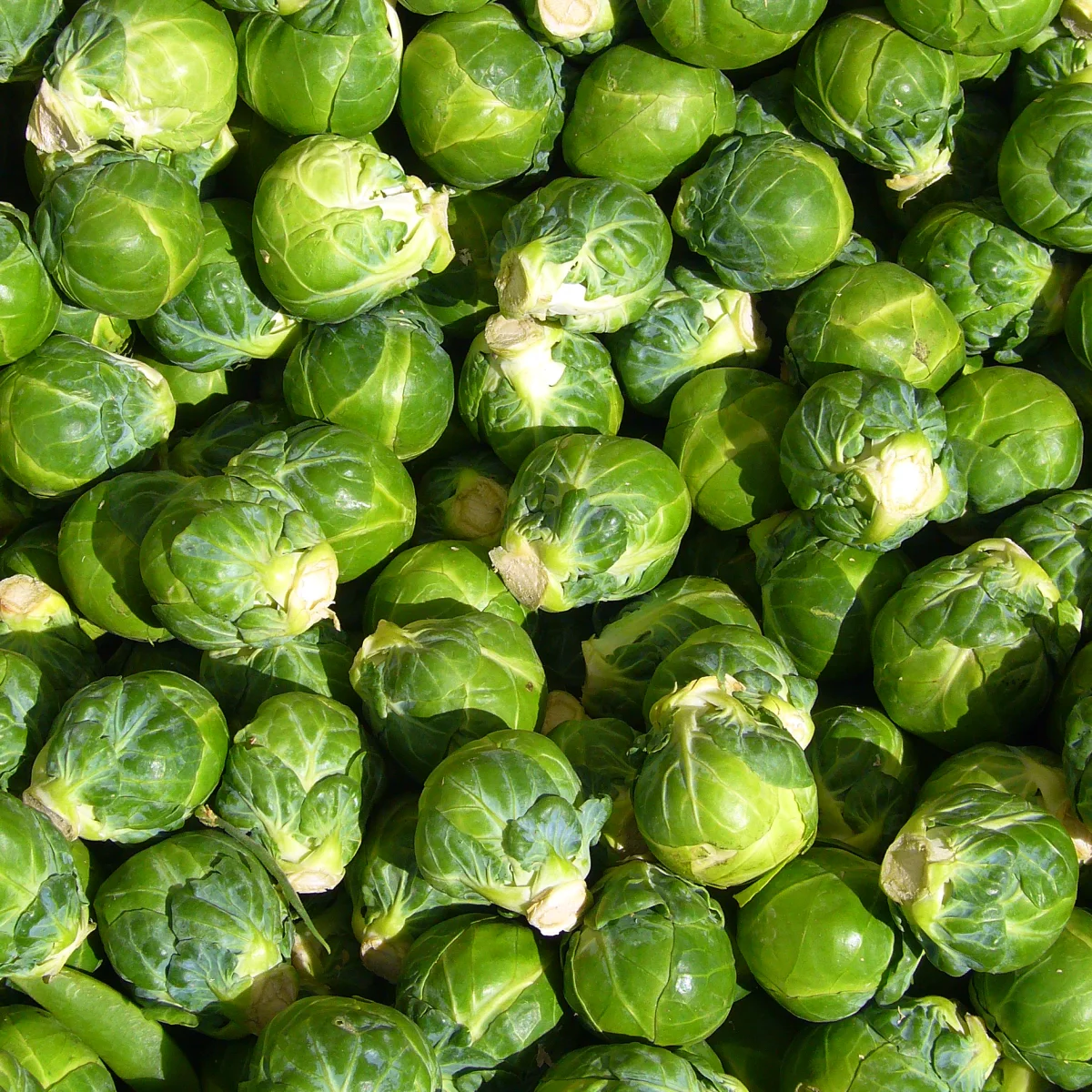
Representative image of Brussels Sprouts
Brussels Sprouts · Eric Hunt · CC BY 2.5
USDA Zone Suitability
Regional Suitability

A reviewed rating of expected performance in a stated scope. Unknown is not the same as Not Suitable.

Learn more

Brussels Sprouts

No suitability record has been added for Brussels Sprouts .

When to Plant

Planting Window

A useful range for a planting action, not an order to plant on one exact day.

Learn more

Showing planting windows for Brussels Sprouts for USA.

No planting-window records were found for this crop for USA.

Growing Details

Recommended Method
Growing Method

The material and action used to begin the crop: seed, transplant, set, bulb, crown, root, or slip.

Learn more
Transplant
Seed Depth
Seed Depth

The approximate depth at which seed should be covered; soil and moisture conditions can affect emergence.

Learn more
1/4 - 1/2"
Plant Spacing
Plant Spacing

The center-to-center distance between neighboring plants in a growing layout.

Learn more
18-24"
Row Spacing
Row Spacing

The distance between parallel rows, often including room for access or cultivation.

Learn more
24-36"
Days to Harvest
Days to Harvest

An estimated time to usable harvest. The starting point and actual growing time can vary.

Learn more
80–130 days
Indoor Seed Starting
Starting Seeds Indoors

Count this many weeks backward from the recommended outdoor transplant date.

Learn more
4–8 weeks before transplant
Sun Requirement
Full Sun (6-8 hours daily)
Water Notes
Maintain consistently moist soil by providing approximately 1–1½ inches (25–38 mm) of water per week, adjusting for rainfall. Avoid cycles of drought followed by heavy watering, which can reduce sprout quality and encourage splitting. Mulching helps conserve moisture and moderate soil temperatures.
Soil Notes
Grow in well-drained, fertile soil with abundant organic matter and a soil pH between 6.0 and 7.5. Work compost or aged manure into the soil before planting. Avoid poorly drained soils and compacted beds.
General Notes
Brussels sprouts are a long-season cool-weather crop.
Best flavor develops after exposure to light frosts, which convert starches into sugars.
Plants can reach 2–4 feet (60–120 cm) tall and may require staking in windy areas.
Harvest sprouts from the bottom of the stalk upward as they become firm and reach about 1–2 inches (2.5–5 cm) in diameter.
Removing the plant's growing tip (topping) 3–4 weeks before the anticipated final harvest can encourage more uniform sprout sizing.
Remove yellowing lower leaves during the season to improve airflow and reduce disease pressure.
Avoid high temperatures during sprout formation whenever possible, as heat can reduce quality and loosen sprouts.

Fertilizer

How to choose: Start with one option that matches your immediate goal. Use quick-release options for rapid correction, slow-release or organic options for steadier feeding, and follow label rates plus local soil-test guidance.
These are alternatives, not a combined recipe. Pick one approach that matches your goal and timing, then follow product-label rates and local soil-test guidance. Do not mix multiple fertilizers unless the product labels explicitly allow it.
Soil-Analysis Vegetable Fertility Plan
Not rated yet

For: Brussels Sprouts

Start here first: This is the first-listed option for this crop.

Type: Other

Dose: Follow product label

Good fit: Fast correction

Base vegetable fertilization on a laboratory soil test and the needs of the crop family; legumes generally need less supplemental nitrogen than leafy or fruiting vegetables.

Application: Compatibility: not established; verify both product labels and apply separately unless the labels explicitly permit combining them. Always follow product-label rates for crop stage and local conditions. Rate: Follow product label. Caution: Do not combine products unless both labels permit the combination. Correct pH and confirmed deficiencies before planting. Apply only the nutrient and amount indicated by the soil test or local Extension recommendation; keep granular fertilizer away from stems and foliage and water it in according to the label.

Source: University of Maryland Extension

Complete Balanced Inherited: Brassicas
Not rated yet

For: Brussels Sprouts

Type: Slow Release

Stage: Pre-plant

Goal: Root development

Dose: Apply according to current soil test

Good fit: Steady feeding

Recommended for Brassicas. Use stage: Pre Plant. Primary goal: Root Development. Heavy-feeding group; incorporate before planting.

Application: How to use: Top-dressSpread fertilizer on the soil surface around the plant and water it in.. Dosing limit: max 1 applications per cycle. Compatibility: do not mix with fresh_manure. Always follow product-label rates for crop stage and local conditions. Use current soil-test guidance before adjusting rates. Rate: Apply according to current soil test. Caution: Use only when a current soil test or qualified recommendation supports this amendment.

Heavy-feeding group; incorporate before planting.

Nitrogen Side Dress Inherited: Brassicas
Not rated yet

For: Brussels Sprouts

Type: Slow Release

Stage: Vegetative

Goal: Leafy growth

Dose: Follow product label

Good fit: Steady feeding

Recommended for Brassicas. Use stage: Vegetative. Primary goal: Leafy Growth. Primary feeding period.

Application: How to use: Granular side-dressApply fertilizer in a narrow band beside the row or plant base, keeping material off stems and leaves.. Dosing frequency: every 21 days. Dosing limit: max 2 applications per cycle. Compatibility: do not mix with high_phosphorus_bloom_fertilizers. Always follow product-label rates for crop stage and local conditions. Rate: Follow product label. Caution: Do not combine products unless both labels permit the combination.

Primary feeding period.

More options2
Starter Solution Inherited: Brassicas
Not rated yet

For: Brussels Sprouts

Type: Liquid

Stage: Transplant

Goal: Root development

Dose: Follow product label

Good fit: Fast correction

Recommended for Brassicas. Use stage: Transplant. Primary goal: Root Development. Supports transplant establishment.

Application: How to use: FertigationApply fertilizer through irrigation water so nutrients move into the root zone.. Dosing limit: max 1 applications per cycle. Compatibility: do not mix with high_salt_fertilizers. Always follow product-label rates for crop stage and local conditions. Rate: Follow product label. Caution: Do not combine products unless both labels permit the combination.

Supports transplant establishment.

Boron Micronutrient Inherited: Brassicas
Not rated yet

For: Brussels Sprouts

Type: Liquid

Stage: Maintenance

Goal: Correction

Dose: Apply according to current soil test

Good fit: Fast correction

Recommended for Brassicas. Use stage: Maintenance. Primary goal: Correction. Only when deficiency is confirmed.

Application: How to use: FoliarSpray a diluted fertilizer onto leaves for quick uptake; avoid high heat and direct midday sun.. Dosing frequency: every 14 days. Dosing limit: max 1 applications per cycle. Compatibility: do not mix with excess_boron. Always follow product-label rates for crop stage and local conditions. Use current soil-test guidance before adjusting rates. Rate: Apply according to current soil test. Caution: Use only when a current soil test or qualified recommendation supports this amendment.

Only when deficiency is confirmed.

Expected Pests, Diseases & Disorders

Select “View info” for identifying symptoms, favorable conditions, prevention, and management. Reference photos are shown when available.

Disease 9
Downy mildew Peronosporaceae (crop-specific species) Common
Seedling damping-off Pythium spp.; Rhizoctonia solani; Fusarium spp.; others Common
Gray mold / Botrytis rot Botrytis cinerea Common
White mold / Sclerotinia rot Sclerotinia sclerotiorum; Sclerotinia minor Common
Clubroot of brassicas Plasmodiophora brassicae Major host
Alternaria leaf spot of brassicas Alternaria brassicae; Alternaria brassicicola Major host
Cercospora leaf spot Cercospora beticola and related Cercospora spp. Common
Black rot of crucifers Xanthomonas campestris pv. campestris Major host
Bacterial soft rot Pectobacterium spp.; Dickeya spp. Common
Pest 14
Aphids Aphididae Common
Whiteflies Aleyrodidae Common
Flea beetles Alticini (several species) Common
Cutworms Noctuidae (several species) Common
Imported cabbageworm Pieris rapae Major host
Cabbage looper Trichoplusia ni Major host
Diamondback moth Plutella xylostella Major host
Vegetable leafminers Liriomyza spp.; Pegomya spp. Common
Cabbage maggot Delia radicum Major host
Harlequin bug Murgantia histrionica Major host
Slugs and snails Gastropoda (several species) Common
White-tailed deer Odocoileus virginianus Common
Cottontail rabbits Sylvilagus spp. Common
Groundhog / woodchuck Marmota monax Common

Companion Planting

Plant Partners for Brussels Sprouts

Companion suggestions are grouped by how they may help, support, or conflict with this crop in the garden.

Support Plants

These plants can help attract pollinators, beneficial insects, or provide garden support nearby.

Dill

Beneficial insects

Dill flowers can attract beneficial insects near brassica beds. Focus: beneficial insects

Traditional guidance Source: UVM Biodiverse Vegetable Garden

Rotation Notes

Crop Family
Brassicaceae / Cole crop
Rotate After
Rotate this crop family out of the same bed after harvest.
Avoid Following
Avoid planting the same family in the same bed more than once every three to four years. Same family: Brassicaceae / Cole crop.
Good Following Crops
Use an unrelated crop family next. Legumes can be useful after heavy feeders, but adjust fertility to avoid excess leafy growth.
Notes
Rotation helps reduce soil-borne disease and common soil pests. Smaller raised beds or divided zones make this easier to track.

Crop Reference

Scientific Name
Brassica oleracea var. gemmifera
Crop Type
Vegetable
Default Method
Transplant
Growing Notes
Set transplants where they have room to grow. Maintain steady moisture, avoid heat stress where possible, and scout for cabbage worms, loopers, and aphids.
Harvest Notes
Harvest firm sprouts from the lower stalk upward as they reach usable size. Remove yellowing lower leaves as needed.
Storage Notes
Refrigerate sprouts after harvest. Leave sprouts on the stalk briefly if storing whole stalks in cool conditions.
My Garden Feature

Keep a Journal for Brussels Sprouts

Save planting notes, upload photos, track weather and pest issues, record harvests, and build a history of what works in your garden.

Create a free account to add Brussels Sprouts to My Garden and start keeping notes for your own planting.

Back to top