
Home / Crops / Borage
USA · Crop Guide

Borage

Annual flowering herb valued for blue flowers that attract pollinators.

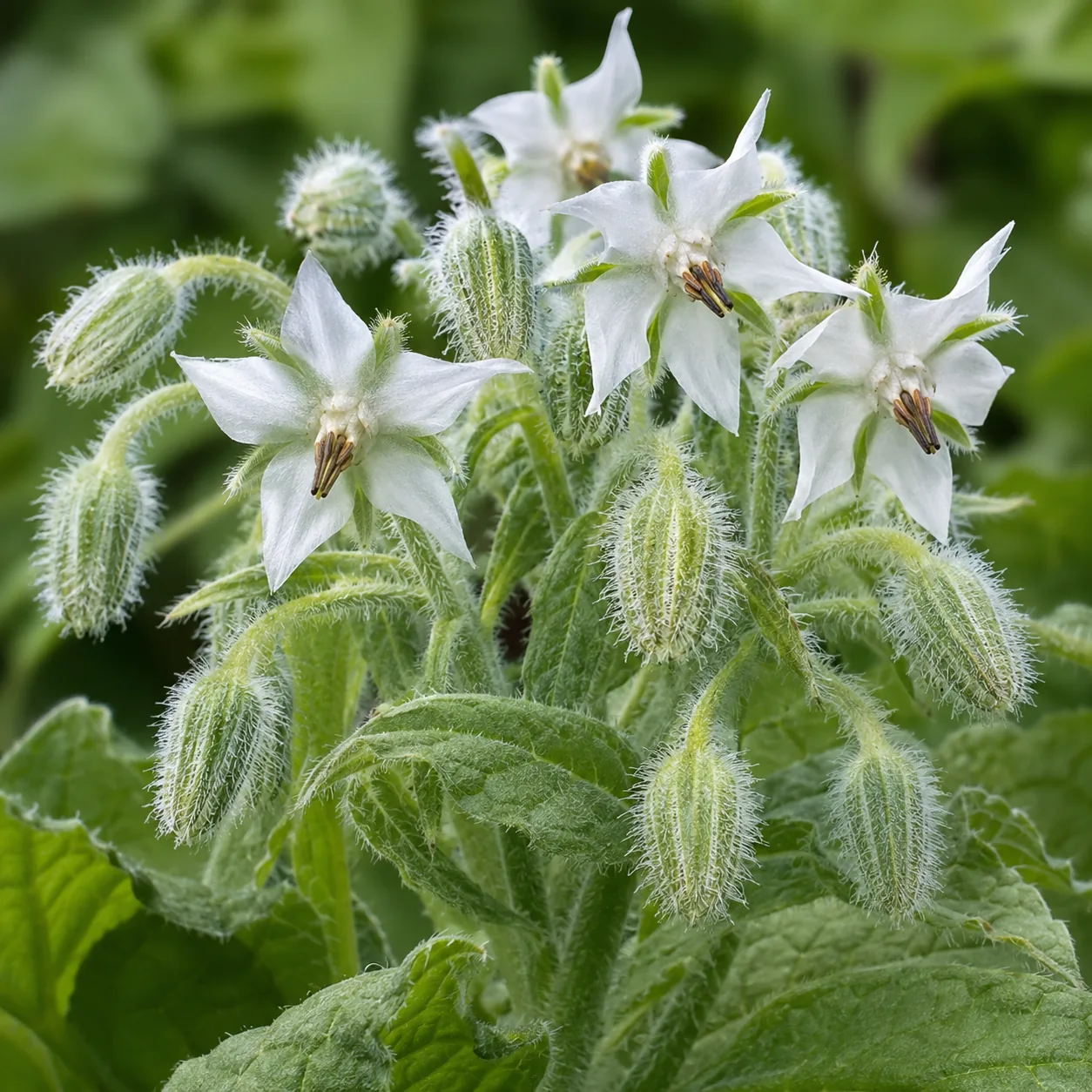
Borage Blossoms
Borage Blossoms · Kyle Vernon
USDA Zone Suitability

Borage

No suitability record has been added for Borage .

When to Plant

Showing planting windows for Borage for USA.

No planting-window records were found for this crop for USA.

Growing Details

Recommended Method
Direct Seed
Seed Depth
1/4" to 1/2"
Plant Spacing
18" to 24"
Row Spacing
24"
Days to Harvest
56–70 days
Indoor Seed Starting
3–4 weeks before transplant
Sun Requirement
Full sun to partial shade
Water Notes
As your borage is growing from seed and getting established in your garden, water it at least every few days to keep the soil evenly moist but not soggy. Once the plant is mature, you can allow the soil to dry out between waterings.
Soil Notes
Borage can thrive even in dry, nutrient-poor soils. However, it prefers a moderately moist, well-drained soil. It also can tolerate a fairly wide soil pH range, though it likes slightly acidic soil. Amending your soil with organic matter will help to give your plants a nutritional boost.
General Notes
Borage will reach maturity in about eight weeks, when you can harvest the leaves and flowers as needed. The plants will start to decline if they are not deadheaded and are left to go to seed. Staggering your planting times will give you a longer bloom period, along with a longer harvest time.

Simply pick off the leaves and flowers you need by hand or use garden scissors. They are best used fresh after harvesting, though you also can keep them in the refrigerator for a few days.

Fertilizer

Borage plants growing in poor soil will benefit from periodic feeding with any fertilizer labeled for use on edible plants, following label instructions. Fertilizer that's high in phosphorous will aid in flower production.

Expected Pests, Diseases & Disorders

Select “View info” for identifying symptoms, favorable conditions, prevention, and management. Reference photos are shown when available.

Disease 6
Powdery mildew Erysiphales (multiple genera and species) Common
Seedling damping-off Pythium spp.; Rhizoctonia solani; Fusarium spp.; others Common
Gray mold / Botrytis rot Botrytis cinerea Common
Southern blight Athelia rolfsii (syn. Sclerotium rolfsii) Common
Vegetable mosaic virus complex Cucumber mosaic virus; Watermelon mosaic virus; Zucchini yellow mosaic virus; others Common
Aster yellows Candidatus Phytoplasma asteris and related phytoplasmas Common
Pest 9
Aphids Aphididae Common
Thrips Thripidae (several species) Common
Two-spotted spider mite Tetranychus urticae Common
Cutworms Noctuidae (several species) Common
Japanese beetle Popillia japonica Common
Slugs and snails Gastropoda (several species) Common
Fungus gnats Bradysia spp. Common
Cottontail rabbits Sylvilagus spp. Common
Birds (seed and fruit feeders) Aves (multiple species) Common

Companion Planting

Plant Partners for Borage

Companion suggestions are grouped by how they may help, support, or conflict with this crop in the garden.

Good Companions

These plants are commonly paired with Borage for shared growing benefits.

Cucumbers

Good nearby

Borage helps improve the growth and flavor of cucumbers

Traditional guidance Source: The Spruce

Peas, Southern

Good nearby

As nitrogen-fixers, peas benefit from borage's presence, enhancing soil fertility

Traditional guidance Source: The Spruce

Potatoes, Irish

Good nearby

They may compete for nutrients and space, leading to reduced growth

Traditional guidance Source: The Spruce

Tomatoes

Good nearby

It can deter aphids and other pest that affect tomatoes

Traditional guidance Source: The Spruce

Support Plants

These plants can help attract pollinators, beneficial insects, or provide garden support nearby.

Cantaloupes

Beneficial insects

Borage flowers can support pollinators near melon vines. Focus: pollinators

Traditional guidance Source: UVM Biodiverse Vegetable Garden

Watermelons

Beneficial insects

Borage flowers can support pollinators near watermelon vines. Focus: pollinators

Traditional guidance Source: UVM Biodiverse Vegetable Garden

Pumpkins

Beneficial insects

Borage flowers can support pollinators near pumpkin vines. Focus: pollinators

Traditional guidance Source: UVM Biodiverse Vegetable Garden

Squash, Summer

Beneficial insects

Borage flowers can support pollinators near summer squash. Focus: pollinators

Traditional guidance Source: UVM Biodiverse Vegetable Garden

Tomatoes

Beneficial insects

Flowering herb can attract pollinators and beneficial insects near fruiting crops. Focus: pollinators / beneficial insects

Traditional guidance Source: UVM Biodiverse Vegetable Garden

Rotation Notes

No crop rotation notes have been added for Borage yet.

Crop Reference

Scientific Name
Borago officinalis
Crop Type
Herb
Default Method
Direct Seed
Growing Notes
Direct seed after soil warms. Give plants room, as mature borage can become broad and somewhat floppy.
Harvest Notes
Harvest flowers fresh as needed. Young leaves are edible but have a rough texture.
Storage Notes
Use flowers fresh. Borage does not store well after cutting.
My Garden Feature

Keep a Journal for Borage

Save planting notes, upload photos, track weather and pest issues, record harvests, and build a history of what works in your garden.

Create a free account to add Borage to My Garden and start keeping notes for your own planting.

Back to top