
Home / Crops / Avocado
USA · Crop Guide

Avocado

Perennial fruit tree: Avocado.

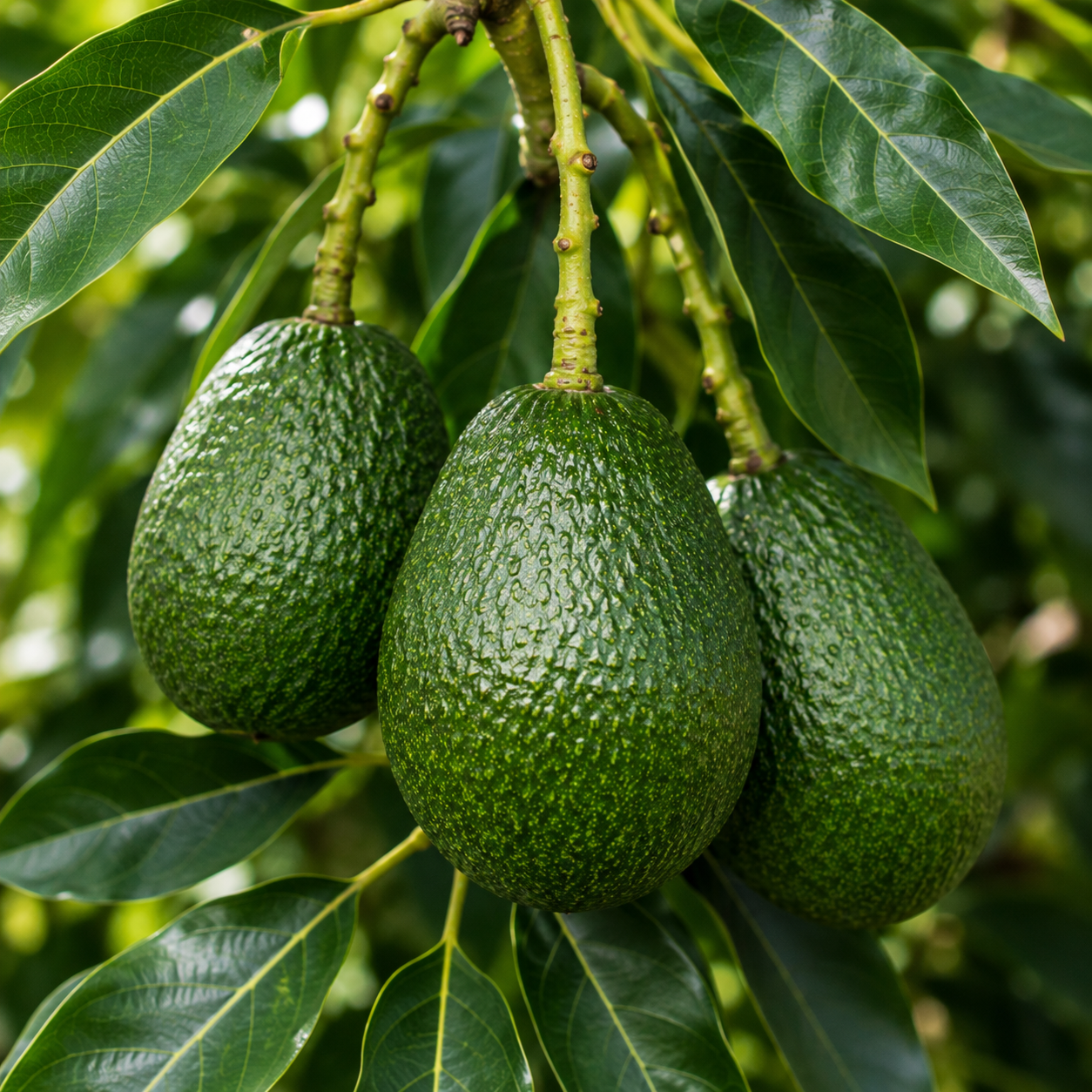
Representative image of Avocado
Fruits of avocado (Persea americana) · Edaphia
USDA Zone Suitability
Regional Suitability

A reviewed rating of expected performance in a stated scope. Unknown is not the same as Not Suitable.

Learn more

Avocado

No suitability record has been added for Avocado .

When to Plant

Planting Window

A useful range for a planting action, not an order to plant on one exact day.

Learn more

Showing planting windows for Avocado for USA.

Transplant Outdoors
Spring — Feb 15 – May 31 — Plant after damaging cold is unlikely; exact timing must follow local subtropical guidance. This is a reusable crop-level rule; Edaphia calculates zone dates from the active frost profile. Review against local extension guidance before production import. · Method: Individual Hole

Growing Details

Recommended Method
Growing Method

The material and action used to begin the crop: seed, transplant, set, bulb, crown, root, or slip.

Learn more
Transplant
Plant Spacing
Plant Spacing

The center-to-center distance between neighboring plants in a growing layout.

Learn more
15-25'
Row Spacing
Row Spacing

The distance between parallel rows, often including room for access or cultivation.

Learn more
20-30'
Days to Harvest
Days to Harvest

An estimated time to usable harvest. The starting point and actual growing time can vary.

Learn more
180–540 days
Sun Requirement
Full sun is the baseline for flowering and crop production; verify the species and rootstock requirements before siting.
Water Notes
Water deeply and regularly during the first several years to establish a strong root system. Mature trees prefer deep, infrequent irrigation rather than frequent shallow watering. Maintain evenly moist soil but avoid standing water, as avocado roots are highly sensitive to waterlogging and root rot. Reduce irrigation during cool, wet weather and increase during extended drought or high heat. Mulching helps conserve moisture and moderate soil temperatures.
Soil Notes
Prefers deep, fertile, well-drained sandy or loamy soils with excellent drainage. Ideal soil pH is approximately 5.5–7.0. Avocados perform poorly in heavy clay or poorly drained soils due to their susceptibility to Phytophthora root rot. Avoid planting in low-lying areas where water accumulates. A coarse organic mulch is beneficial but should be kept several inches away from the trunk.
General Notes
Avocados are evergreen subtropical trees that perform best in warm, frost-free climates. Trees are classified as Type A or Type B flowering cultivars; while some cultivars are self-fruitful, planting both flowering types nearby generally improves pollination and yields. Grafted trees typically begin bearing fruit within 3–5 years, while seed-grown trees may require 7–15 years and often do not produce fruit true to type. Fruit matures on the tree but does not soften until harvested. Harvest timing varies widely by cultivar, with some varieties requiring six months from flowering to maturity and others up to eighteen months. Annual light pruning helps maintain tree size and improves air circulation. Young trees benefit from frost protection in marginal climates.

Avocados are unlike annual crops because the days to harvest depend heavily on the cultivar:

Mexican types: approximately 6–8 months after flowering.
Guatemalan types (including 'Hass'): approximately 12–18 months after flowering.
West Indian types: approximately 6–9 months after flowering.

Fertilizer

How to choose: Start with one option that matches your immediate goal. Use quick-release options for rapid correction, slow-release or organic options for steadier feeding, and follow label rates plus local soil-test guidance.
These are alternatives, not a combined recipe. Pick one approach that matches your goal and timing, then follow product-label rates and local soil-test guidance. Do not mix multiple fertilizers unless the product labels explicitly allow it.
Fish Emulsion Organic
Not rated yet

For: Avocado

Start here first: This is the first-listed option for this crop.

Type: Liquid

Dose: Follow product label

Good fit: Fast correction

Recommended for Greens. Use stage: Maintenance. Primary goal: General Maintenance. Useful between harvests at label rates.

Application: How to use: fertigationApply fertilizer through irrigation water so nutrients move into the root zone.. Dosing frequency: every 14 days. Dosing limit: max 4 applications per cycle. Compatibility: do not mix with copper_sprays. Always follow product-label rates for crop stage and local conditions. Rate: Follow product label. Caution: Do not combine products unless both labels permit the combination.

Compost
Not rated yet

For: Avocado

Type: Slow Release

Dose: Follow product label

Good fit: Steady feeding

Recommended for Herbs. Use stage: Maintenance. Primary goal: General Maintenance. Use light feeding only.

Application: How to use: top-dressSpread fertilizer on the soil surface around the plant and water it in.. Dosing frequency: every 60 days. Dosing limit: max 2 applications per cycle. Compatibility: not established; the legacy record names no specific conflict, but both product labels must still permit combining them. Always follow product-label rates for crop stage and local conditions. Rate: Follow product label. Caution: Do not combine products unless both labels permit the combination.

Soil-Guided Perennial Fruit Plan
Not rated yet

For: Avocado

Type: Other

Dose: Follow product label

Good fit: Fast correction

Manage orchard and perennial-fruit fertility with soil testing, plant vigor, crop load, and—where locally recommended—leaf or tissue analysis.

Application: Compatibility: not established; verify both product labels and apply separately unless the labels explicitly permit combining them. Always follow product-label rates for crop stage and local conditions. Rate: Follow product label. Caution: Do not combine products unless both labels permit the combination. Test before planting and every few years thereafter. Correct pH and confirmed deficiencies; avoid routine excess nitrogen that drives tender growth. Follow crop- and region-specific Extension rates rather than a universal dose.

Source: University of Minnesota Extension

More options1
Citrus & Avocado
Not rated yet

For: Avocado

Type: Synthetic

Dose: Follow product label

Complete fertilizer formulated for avocado and citrus with moderate nitrogen, higher potassium, and essential micronutrients.

Application: Compatibility: not established; verify both product labels and apply separately unless the labels explicitly permit combining them. Always follow product-label rates for crop stage and local conditions. Rate: Follow product label. Caution: Do not combine products unless both labels permit the combination. Apply 2–4 times during the growing season according to tree age and label directions. Keep fertilizer away from the trunk and water thoroughly after application.

Expected Pests, Diseases & Disorders

Select “View info” for identifying symptoms, favorable conditions, prevention, and management. Reference photos are shown when available.

Disease 3
Powdery mildew Erysiphales (multiple genera and species)
Gray mold / Botrytis rot Botrytis cinerea
Verticillium wilt Verticillium dahliae; Verticillium albo-atrum
Pest 8
Aphids Aphididae
Two-spotted spider mite Tetranychus urticae
Japanese beetle Popillia japonica
Brown marmorated stink bug Halyomorpha halys
Plum curculio Conotrachelus nenuphar
White-tailed deer Odocoileus virginianus
Voles Microtus spp.
Birds (seed and fruit feeders) Aves (multiple species)

Companion Planting

Plant Partners for Avocado

Companion suggestions are grouped by how they may help, support, or conflict with this crop in the garden.

Support Plants

These plants can help attract pollinators, beneficial insects, or provide garden support nearby.

Buckwheat

Beneficial insects

Flowering buckwheat offers accessible nectar and attracts beneficial wasps, generalist predators, hover flies, and bees.

Extension supported Source: OSU Extension PNW 550 — Beneficial Insects

Rotation Notes

Crop Family
Perennials and Permanent Crops
Rotation Status
Permanent planting — annual bed rotation is not applicable.
Soil Effect
neutral
Site Guidance
Keep permanent crops in their established location instead of rotating annually.
Family Guidance
Asparagus, rhubarb, berries, and other long-lived crops are displayed but exempt from annual rotation warnings.

Crop Reference

Scientific Name
Persea americana
Crop Type
Fruit
Default Method
Unknown
My Garden Feature

Keep a Journal for Avocado

Save planting notes, upload photos, track weather and pest issues, record harvests, and build a history of what works in your garden.

Create a free account to add Avocado to My Garden and start keeping notes for your own planting.

Back to top