
Home / Crops / Corn, Sweet
USA · Crop Guide

Corn, Sweet

Warm-season grass crop grown for sweet edible ears.

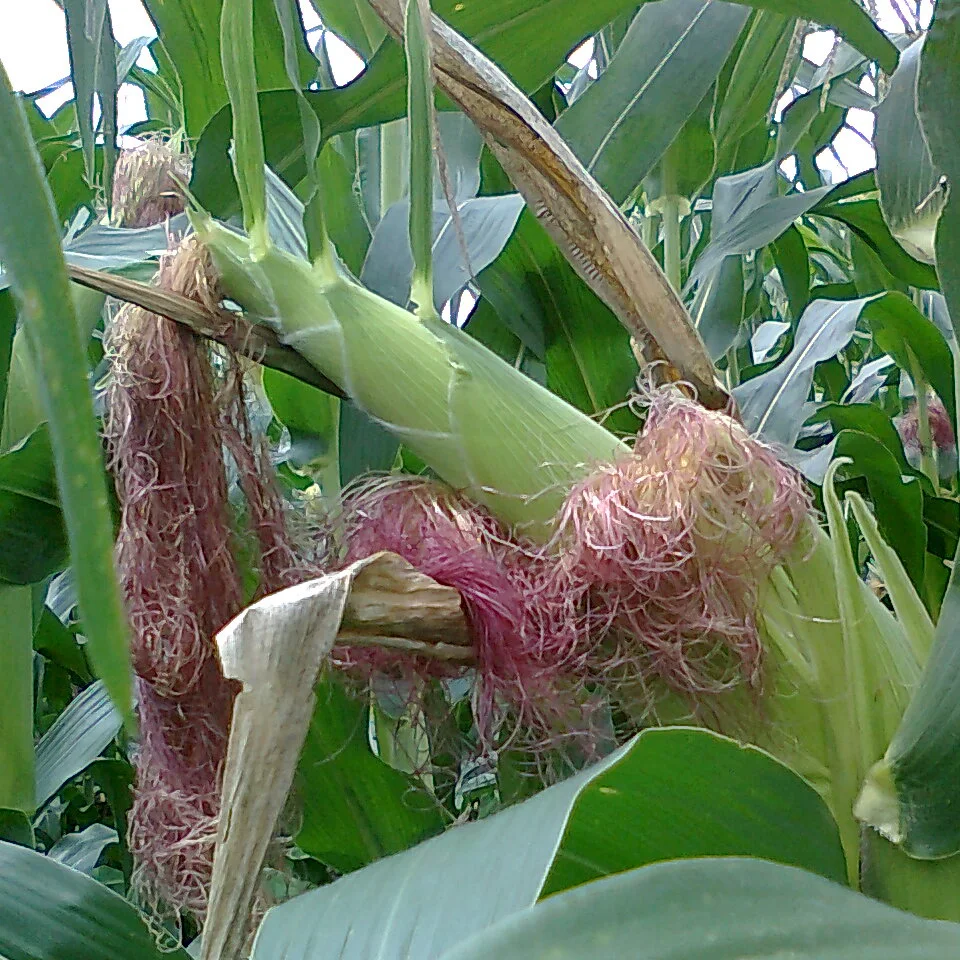
Representative image of Corn, Sweet
Maka (Sweet Corn) farm in Chinawal village, Maharashtra, India · ABHIJEET · CC BY-SA 3.0
USDA Zone Suitability

Corn, Sweet

No suitability record has been added for Corn, Sweet .

When to Plant

Local planting windows for USA are not yet available.

Edaphia does not yet have local planting-window guidance for USA.

Growing Details

Local planting details are not yet available for this location.

Fertilizer

Sweet corn

6-7 pounds 8-8-8 or 4-5 pounds 8-24-24 per 100 feet of row or 300 square feet.

Side-dress: At 1 foot and 3 feet tall.

One quart of fertilizer weighs about 2 pounds. First analysis listed is the preferred blend. General recommendations assume average soil fertility; LSU recommends soil testing at least every three years.

Expected Pests, Diseases & Disorders

Select “View info” for identifying symptoms, favorable conditions, prevention, and management. Reference photos are shown when available.

Disease 5
Downy mildew Peronosporaceae (crop-specific species) Common
Seedling damping-off Pythium spp.; Rhizoctonia solani; Fusarium spp.; others Common
Anthracnose of vegetables Colletotrichum spp. Common
Vegetable mosaic virus complex Cucumber mosaic virus; Watermelon mosaic virus; Zucchini yellow mosaic virus; others Common
Corn smut Ustilago maydis Major host
Pest 13
Aphids Aphididae Common
Thrips Thripidae (several species) Common
Two-spotted spider mite Tetranychus urticae Common
Cutworms Noctuidae (several species) Common
Spotted cucumber beetle Diabrotica undecimpunctata howardi Common
Japanese beetle Popillia japonica Common
Corn earworm / tomato fruitworm Helicoverpa zea Major host
Brown marmorated stink bug Halyomorpha halys Common
Root-knot nematodes Meloidogyne spp. Common
Wireworms Elateridae larvae Common
White-tailed deer Odocoileus virginianus Common
Groundhog / woodchuck Marmota monax Common
Birds (seed and fruit feeders) Aves (multiple species) Common

Companion Planting

Plant Partners for Corn, Sweet

Companion suggestions are grouped by how they may help, support, or conflict with this crop in the garden.

Good Companions

These plants are commonly paired with Corn, Sweet for shared growing benefits.

Beans, Snap Pole

Good nearby

Pole beans can use vertical space near corn when timing and support are planned carefully. Focus: vertical space sharing

Traditional guidance Source: ATTRA Companion Planting Resources

Beans, Lima Pole

Good nearby

Pole lima beans may use vertical space near corn when timing and support are planned carefully. Focus: vertical space sharing

Traditional guidance Source: The Spruce

Squash, Summer

Good nearby

Squash can cover nearby soil while corn grows upright if spacing is generous. Focus: living mulch / space sharing

Traditional guidance Source: ATTRA Companion Planting Resources

Pumpkins

Good nearby

Pumpkin vines can cover ground near tall corn when space is generous. Focus: living mulch / space sharing

Traditional guidance Source: ATTRA Companion Planting Resources

Beans, Lima Bush

Good nearby

Warm-season crops that can share garden space when spacing and harvest access are planned. Focus: space sharing

Practical guidance Source: The Spruce

Beans, Snap Bush

Good nearby

Bush beans can share warm-season timing near corn when spacing is managed. Focus: space sharing

Practical guidance Source: UMN Companion Planting

Avoid Planting Near

These plants may compete, attract shared pests, or otherwise make poor neighbors.

Sunflower

Use caution

Both are tall, heavy-feeding plants and can compete for sun, water, and fertility. Focus: competition / shading

Practical guidance Source: WSU Companion Plants

Rotation Notes

Crop Family
Poaceae / Grass
Rotate After
Rotate this crop family out of the same bed after harvest.
Avoid Following
Avoid planting the same family in the same bed more than once every three to four years. Same family: Poaceae / Grass.
Good Following Crops
Use an unrelated crop family next. Legumes can be useful after heavy feeders, but adjust fertility to avoid excess leafy growth.
Notes
Rotation helps reduce soil-borne disease and common soil pests. Smaller raised beds or divided zones make this easier to track.

Crop Reference

Scientific Name
Zea mays convar. saccharata
Crop Type
Vegetable
Default Method
Direct Seed
Growing Notes
Direct seed into warm soil. Plant in short blocks for pollination, keep moisture steady during tasseling and ear fill, and side-dress as plants grow.
Harvest Notes
Harvest when silks have browned and kernels are plump and release a milky juice when punctured.
Storage Notes
Use sweet corn soon after harvest for best flavor. Refrigerate ears promptly if not cooking the same day.
My Garden Feature

Keep a Journal for Corn, Sweet

Save planting notes, upload photos, track weather and pest issues, record harvests, and build a history of what works in your garden.

Create a free account to add Corn, Sweet to My Garden and start keeping notes for your own planting.

Back to top